What to Wear for Photos (PA Edition):
A Simple Color Guide Based on Your Season
Before you think about the time of year or the location, the most important question is:
What colors look best on you?
Once you know that, choosing outfits for photos becomes easier — and your images feel more natural and balanced.
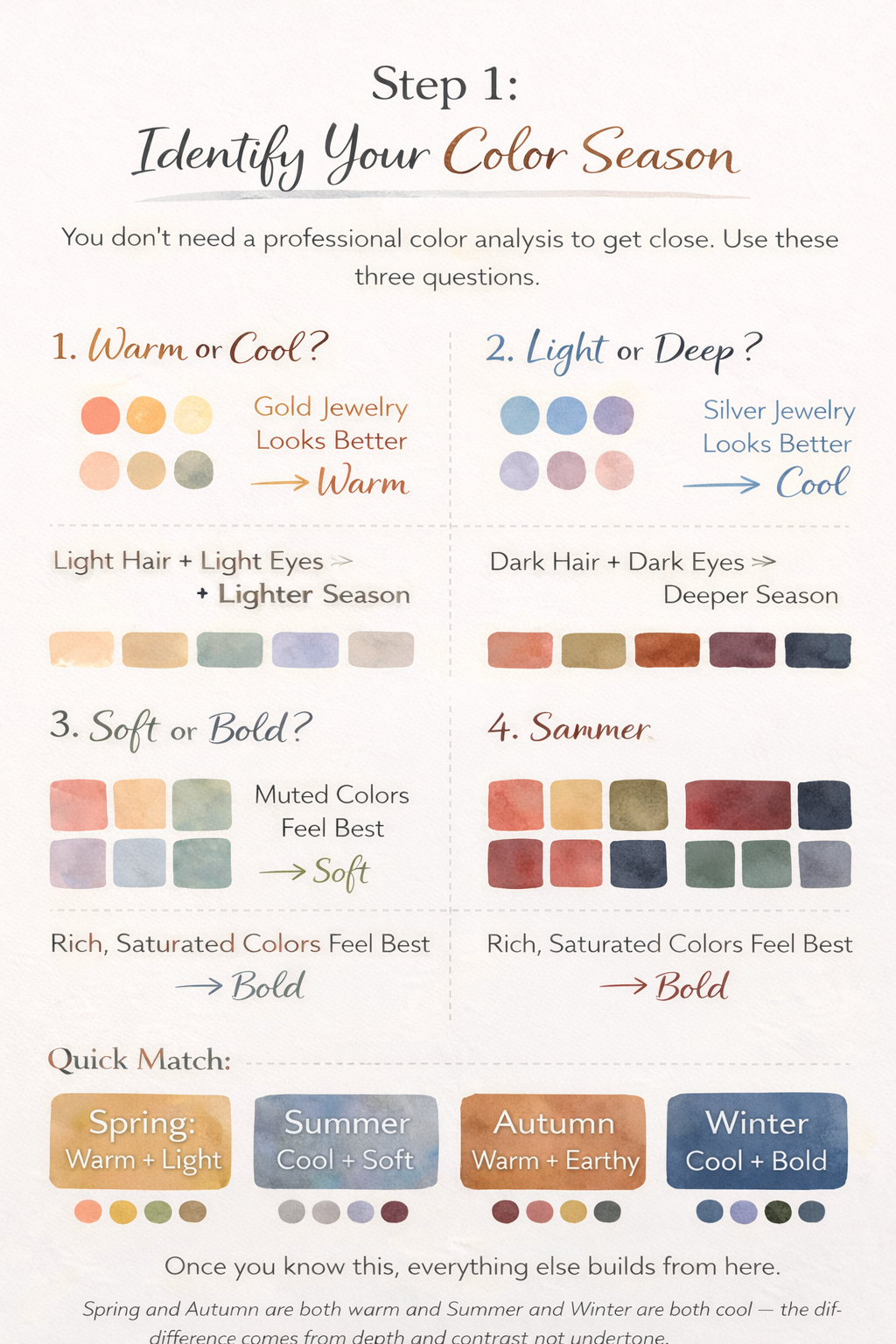
1. Warm or Cool?
- Gold jewelry looks better → Warm
- Silver jewelry looks better → Cool
2. Light or Deep?
- Light hair + light eyes → Lighter season
- Dark hair + dark eyes → Deeper season
3. Soft or Bold?
- Muted colors feel best → Soft
- Rich, saturated colors feel best → Bold
Quick Match:
- Spring: Warm + Light
- Summer: Cool + Soft
- Autumn: Warm + Earthy
- Winter: Cool + Bold
Once you know this, everything else builds from here.
Step 2: Start With Colors That Work on You
Here are the core colors that tend to photograph best for each season.
Spring
Peach, coral, camel, warm blue, soft ivory
Summer
Dusty blue, mauve, lavender, soft gray, rose
Autumn
Olive, rust, mustard, warm brown, deep teal
Winter
Emerald, true red, charcoal, black, crisp white
These are your anchor colors — the shades that should be closest to your face.
Step 3: Match Your Colors to the Time of Year (Without Forcing It)
Instead of changing who you are to match the month, adjust depth and texture within your season.
Spring Sessions
- Spring + Spring → peach, light camel, warm blue
- Autumn wearing Spring → lighter olive, warm tan
Summer Sessions
- Summer → dusty blues, sage, soft lavender
- Winter wearing Summer → navy instead of black
Fall Sessions
- Autumn → rust, forest green, warm burgundy
- Spring wearing Fall → camel, soft rust
Winter Sessions
- Winter → emerald, wine, charcoal
- Summer wearing Winter → cool gray, soft navy
Same season, slightly deeper or lighter — not a whole new palette.
Step 4: Mixing a Family (Dark Hair + Blonde, Warm + Cool)
This is where most people get stuck — and it’s simpler than it seems.
Start With One Anchor Person
Usually:
- the person booking the session
- or the person whose coloring dominates the group
Build around their season.
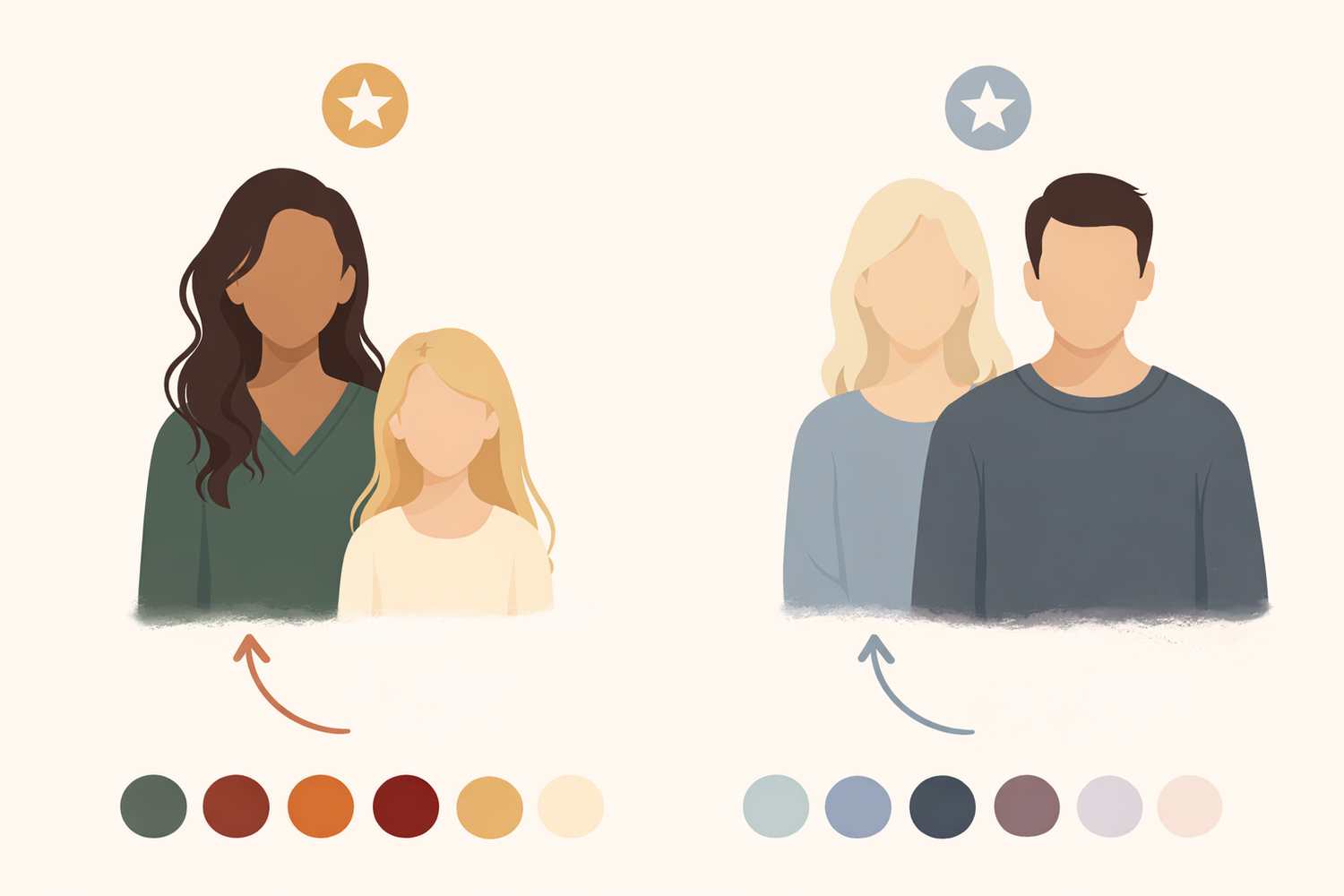
Example: Deep Autumn Parent + Blonde Child
Parent (Deep Autumn):
Forest green, rust, warm burgundy
Blonde Child:
Cream, warm taupe, soft olive
Same warmth. Different depth. No clash.
Example: Winter Parent + Summer Partner
Winter:
Charcoal, emerald, black accents
Summer:
Soft navy, dusty blue, cool gray
Same temperature. Softer contrast.
Key Rule:
- Match undertone first (warm vs cool)
- Then vary depth (light vs dark)
- Use neutrals to bridge the gap
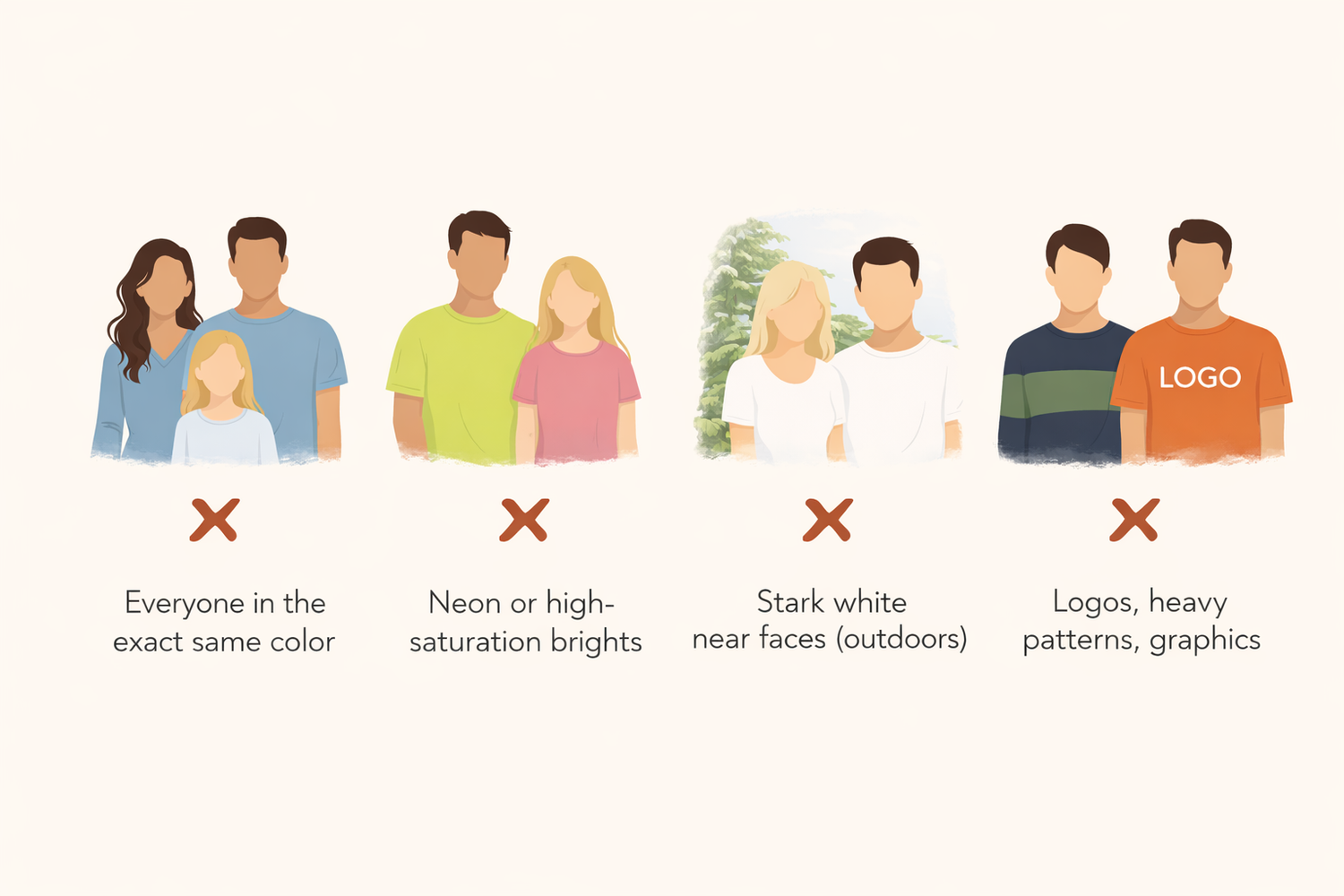
Step 5: What to Avoid (Almost Always)
- Everyone in the exact same color
- Neon or high-saturation brights
- Stark white near faces (especially outdoors)
- Logos, heavy patterns, graphics
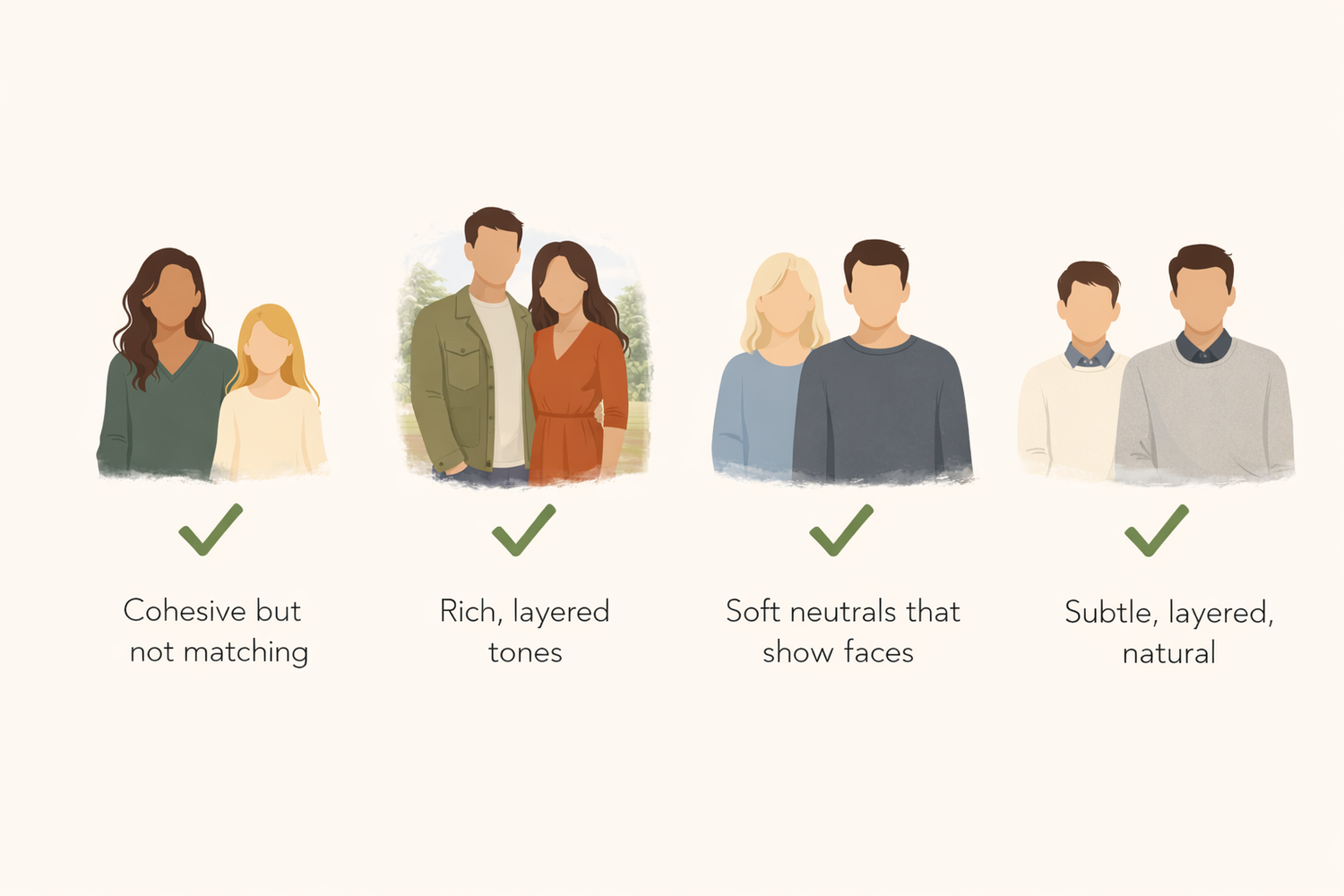
Simple, intentional, layered works best.
Final Thoughts
You don’t need to dress for the calendar.
You need to dress for the people in the photos.
When outfits align with your natural coloring and are adjusted gently for the time of year, photos feel cohesive, flattering, and timeless — without looking styled or forced.
If you’re ever unsure, I’m happy to help you choose colors that feel like you, not a Pinterest checklist.
One Last Thing (Because These Are Guidelines, Not Rules)
All of this guidance exists for one reason:
to help you feel confident choosing outfits that photograph beautifully if that matters to you.
But if it doesn’t?
That’s okay too.
If you want:
- all white shirts at the beach
- matching buffalo plaid in the fall
- jeans and band tees
- something totally sentimental that breaks every “rule”
You absolutely can!
The most meaningful photos come from people being themselves — not from perfectly followed styling advice.
My job isn’t to force you into a look.
It’s to document you, as you are, in a way that feels honest.